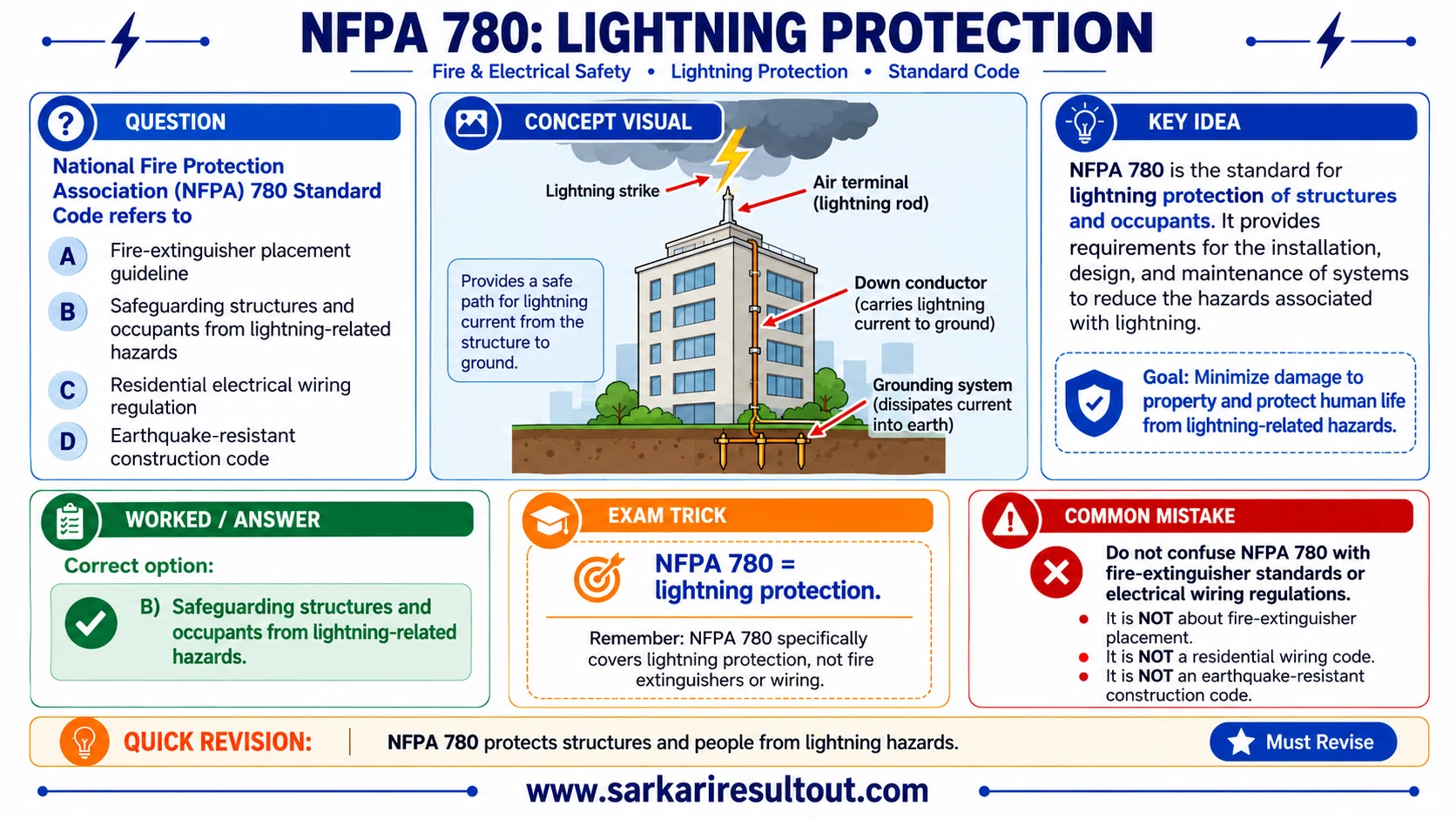
Correct AnswerB. A standard for safeguarding structures and occupants from lightning-related hazards.
Quick Explanation
NFPA 780 is the Standard for the Installation of Lightning Protection Systems. It addresses protection of structures, occupants and contents from lightning-related hazards through air terminals, conductors, bonding and grounding. Therefore option B is correct.
Detailed Explanation
Correct Answer
B — A standard for safeguarding structures and occupants from lightning-related hazards.
Concept and Reasoning
NFPA 780 is the Standard for the Installation of Lightning Protection Systems. It addresses protection of structures, occupants and contents from lightning-related hazards through air terminals, conductors, bonding and grounding. Therefore option B is correct.
Calculation / Key Relation
NFPA 780 → lightning protection systems
Exam Takeaway
780: think lightning rod, down conductor and grounding.
Common Mistake
Do not confuse NFPA 780 with general residential wiring or extinguisher-placement rules.